
What does "Value" really mean?
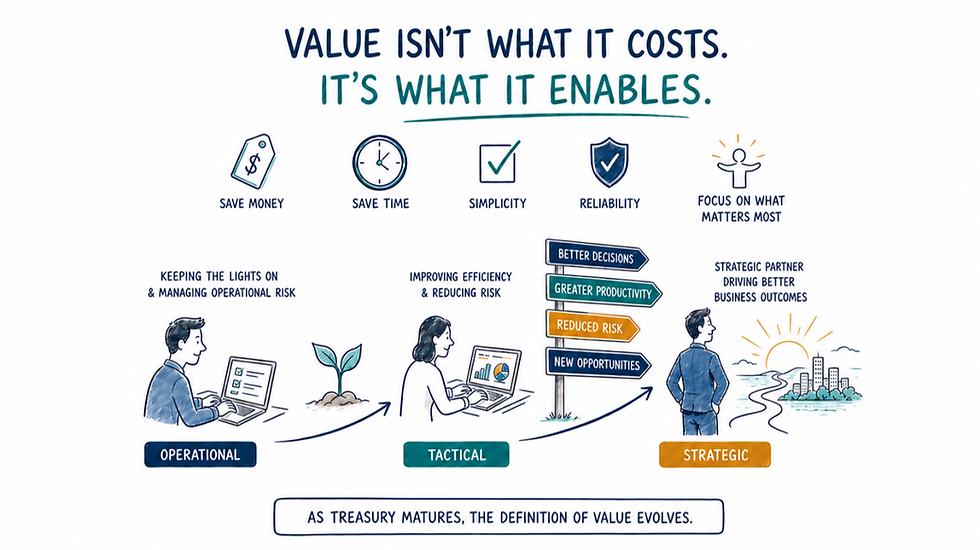
Value is one of those words we use all the time, yet it means something different to everyone.
For some, value is about saving money. For others, it's about saving time. Some find value in simplicity, while others value reliability, confidence, or the freedom to focus on what matters most.
The truth is, value isn't measured by what something costs — it's measured by what it enables.
It might mean:
Better decisions
Greater productivity
Reduced risk
Opportunities that simply weren't possible before
When we designed our SaaS platform, we kept coming back to one question:
"How do we create genuine value for treasury teams?"
For treasury professionals, value isn't one-dimensional. As the treasury function matures, the definition of value changes. It evolves from keeping the lights on and managing operational risk to becoming a strategic partner that helps drive better business outcomes.
We created a Treasury Hierarchy of Needs, which we think provides a great way of visualising this journey.

At the foundation are the essentials:
Visibility
Control
Compliance
Operational efficiency
These capabilities create the platform for higher-value activities such as optimisation, better decision-making, strategic insight, and ultimately positioning treasury as a trusted advisor to the business.
Over the coming weeks, we'll be exploring each level of the hierarchy in more detail — looking at the challenges treasury teams face, why each stage matters, and how platforms like Forge aHedge can help organisations progress from operational excellence to strategic impact.